A Brief History of the Huntsville Traditional Music Association
Today’s HTMA originated in 1966 as a group of amateur and professional musicians who called themselves The Huntsville Association of Folk Musicians (HAFM). Musical instruments ranged from the mundane to the exotic. There were guitars, banjos, ukeleles, Hawaiian guitars, jaw harps, harmonicas, accordions, spoons, lap and hammer dulcimers, ocarinas, recorders, tin whistles and fiddles. Types of music were old folk ballads, sacred, bluegrass, gospel, and 60’s folk songs, including protest songs of the era. Musicians as well as listeners came from long distances to attend meetings and participate in concerts. In the 60’s, the HAFM put out an album entitled “Alabama Folk Music.”
In the early 1980’s, general interest in folk music subsided. To head such an organization is quite a load, and leadership declined.
On April 20, 1989, HAFM was reborn, and in the ensuing years, enjoyed the support of Huntsville papers, music stores, and public radio WLRH. Local commercial stations ran HAFM notices in their public service segments. There were successful members’ concerts at Lions Park in Meridianville, at Wyndham Park, and “Coffeehouse” shows at the UAH student center. HAFM was run loosely, without a constitution or by-laws. The music covered a wide range of traditional and folk music and even stretched the definitions a bit. The Coffeehouse concert events lapsed for a while but came back in 2020.
From about 1989-1991, the club went by the name Tennessee Valley Association of Folk, Traditional and Old-Time Musicians for a while, but then changed to the present Huntsville Traditional Music Association. The treasurer listed 39 dues-paying members that year. Dues were $10/year.
For most of the mid 90s HTMA continued to have general membership meetings and jam sessions in the Huntsville Library auditorium, until an arrangement was worked out to hold meetings in what was then the main building of the Huntsville Botanical Gardens. HTMA produced a day-long music festival at HBG each year in support of the Fern Festival. HTMA held monthly member meetings at the Botanical Gardens and put on outdoor concerts there for nearly five years, until HBG decided to limit use of their facilities to other groups more directly aligned with the Garden’s interests.
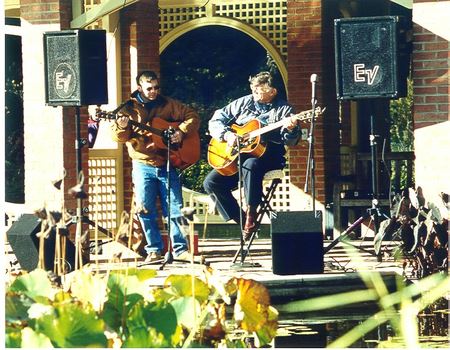
After meeting for six months or so at random places, HTMA was able to schedule regular meetings at a meeting room at the then-new Southeast Library branch until they were able to get back to the auditorium at the Huntsville main library.
Around that time, Jerry LeCroy became president of HTMA and made the bold decision to develop funding and invest in PA equipment to use producing association performances and concerts. That was good and bad. The good part was that they obtained sponsors and developed a reasonable budget to buy basic sound gear. The bad part was that a number of members took strong exception to the Association having anything to do with amplification. About a third of the membership quit that year.
In June 1996 HTMA took delivery of its first PA amplifier, speakers, mixer, and microphones. In August, the first HTMA-sponsored concert was staged which featured paid outside talent, at the UAH School of Music Roberts Recital Hall, featuring songwriter Lisa Busler. It was a big success!
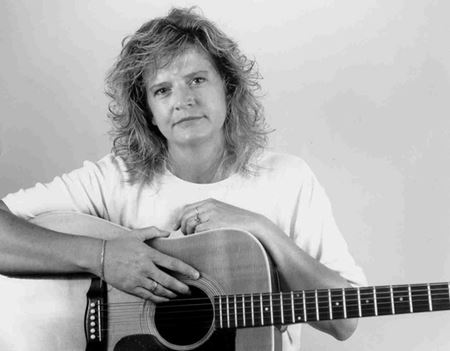
The following year HTMA’s big concert featured Diane Craig and her Summer Moon Quartet. Diane had a big fan base and sold out Roberts Hall. In 1998, that success was repeated with a concert featuring Windham Hill recording artist and songwriter Pierce Pettis from Mentone, Alabama.
These concerts were somewhat stressful for the HTMA production crew. Every concert had many moving parts. Contracts with the artist, rental of venue, printing tickets and programs, selling program ads, arranging volunteers to collect tickets and putting tickets out for sale. Then day-of-show setting up sound gear with very little experience as how to actually run a concert. And always the worry of losing a ton of money on the gig.
HTMA then took a big step up, from the 200-seat recital hall to renting Chan Auditorium at the UAH Business School, which seats about 430. Over the next several years HTMA produced shows at the Chan. The Norman Blake show, in March 2002, was held shortly after the hit movie Oh Brother Where Art Thou was released. The show was a sellout.
The price to rent the Chan Auditorium went up sharply, but it wasn’t just the rent. New contract terms required presenters to use the UAH sound technician and pay the fee, and to hire a couple off-duty police officers and pay their wages. For our little music club, it just got to be too much.
Several more concerts were held at the Unitarian Universalist church, at a rented hall on Winchester Road, and at a large hall at the Methodist Church. Around that time HTMA was up to about eighty dues-paying members. But audiences seemed to be shrinking, and around 2015 it became impossible to recruit a new concert production manager, and lacking the key volunteers, the HTMA concert series went dormant.
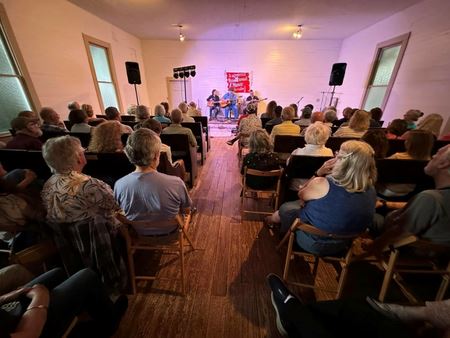
Annual member performances at Burritt Museum began around 1994, along with monthly shows at the UAH Student Center. For the next several years HTMA hosted a monthly coffeehouse at the Student Center with several Nashville musicians, and talent from as far away as Russia, until circumstances necessitated a move to the Old Church at Burritt Museum.
Around 2000, newsletter printing and mailing had been the single largest expense for the association, and thus HTMA entered the digital age and began publishing the newsletter as an on-line document.
In August 2006, HTMA incorporated under the articles of the Alabama Non-Profit Corporation Act, and after some effort, HTMA was approved as a 501.c.3 charitable organization on June 8, 2008.
After HTMA board members spent several years of searching for a suitable fixed venue, past president Lynne Edmondson found a potential opening for HTMA within the Lowe Mill Arts and Entertainment establishment. In May 2024 President Mike Ball and Secretary/Treasurer Jerry LeCroy signed HTMA’s initial lease for our new home in Studio 1038. After lease-signing we began a several-month commissioning process which included removing walls, relocating wiring, painting, building a stage, and installing house sound and light systems. HTMA staged our first performance in our Lowe Mill studio in September 2024, and we have enjoyed hosting several events there every month since then.
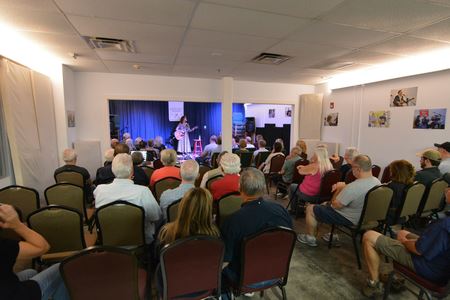
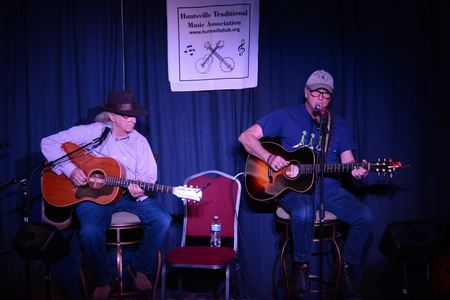
HTMA is committed to supporting live music performances in monthly coffeehouse events. Other concerts and performances may be scheduled at the discretion of the Board and the Performance Chair.
HTMA sponsors music performances to further the expression and appreciation of music in our community. We wish to provide an attractive venue for folk, traditional, ethnic, and other music to be performed in our community, regardless of commercial value, and to provide an outlet to present performances by both members and non-member performers. HTMA is committed to fair compensation for professional performers at all sponsored events.